
Skip to content
AWCH logo with white background
  • About
    • About AWCH
    • History
    • Board
    • Staff
    • Our Supporters
    • Join AWCH
  • What We Do
    • For Health Professionals
    • For Families
    • Ward Grandparent Program
    • Rights of the Child
  • Resources
    • Projects
    • Documents
    • Blog
    • AWCH Library
  • Contact Us
  • Donate
  • Youth Engagement
    • Walking The Talk
    • Collaborate & Connect
      • Toolbox
  • About
    • About AWCH
    • History
    • Board
    • Staff
    • Our Supporters
    • Join AWCH
  • What We Do
    • For Health Professionals
    • For Families
    • Ward Grandparent Program
    • Rights of the Child
  • Resources
    • Projects
    • Documents
    • Blog
    • AWCH Library
  • Contact Us
  • Donate
  • Youth Engagement
    • Walking The Talk
    • Collaborate & Connect
      • Toolbox

Five Key Necessities for Youth Engagement
Click Here for Guide

This Guide is a part of the Walking the Talk project, a collaboration between the Association for the Wellbeing of Children in Healthcare, Health Consumers NSW, and young people.

Findings from the project offer a foundation for improved youth engagement among organisations and services. This Guide collates these findings and synthesises them into practical, effective guidelines for optimal youth engagement.

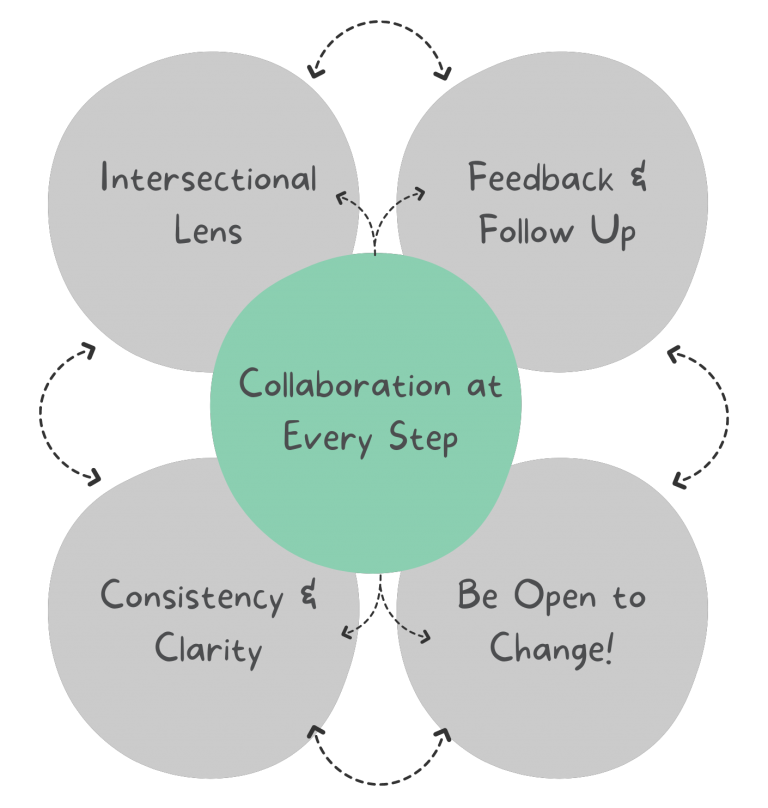
From the findings we developed five key necessities for youth engagement:

  • Collaboration at Every Step
  • Intersectional Lens
  • Feedback & Follow Up
  • Consistency & Clarity
  • Be Open to Change!


Both AWCH and HCNSW have committed to incorporating these five areas into our current and future work. For more information, see each Section below.

Five Key Necessities: Resource Library

Collaboration at Every Step​

Reports

  • Walking the Talk
    • White Paper
    • White Paper Summary
    • Final Report

Factsheets

  • Is Co-Design Right for Us, Now? (KA McKercher)
  • Mindsets for Co-Design (KA McKercher)
  • Co-Design Process (KA McKercher)
  • How to Partner with Young People (Orygen)

Guidelines & Frameworks

  • Walking the Talk: Youth Engagement Guide
  • Better Together: A Practical Guide to Effective Engagement with Young People
  • Amplifying the Youth Voice: Youth Engagement Framework 2021 (Health Consumers QLD)
  • Wellbeing Health & Youth Engagement Framework

Articles

  • Who cares? Introducing a model of care for co-design (KA McKercher)
  • Co-design: Disrupting a common cast of characters (KA MCKercher)
  • Youth participation: Adultism, human rights and professional youth work (Corney et al)
  • Case study: Co-Researching Young People’s Priorities – the ‘Youth Health Matters’ project (WH&Y)

Videos

  • Co-design 101
  • Diversity & Inclusion in Co-design (ALIVE Centre)
    • Part 1 – The Central Role of Trust and Relationships
    • Part 2 – Diversity within Lived-Experience in Co-design
    • Part 3 – Inclusion and Diversity within Mob Co-design
Intersectional Lens

Reports

  • Walking the Talk: Final Report
  • Including Intersectional Identities: guidance on including intersectional LGBTI people in services (Equality Network)

  • Intersections: Healthcare Insights from People with Intersectional Needs (HCNSW)
  • The Voices of LGBTQIA+ Young People in NSW 2022 (ACYP)

Factsheets

  • How to Support LGBTQIA+ Young People in Health Services  (ACYP)

Guidelines & Frameworks

  • Walking the Talk: Youth Engagement Guide
  • LGBTIQ+ Inclusive Language Guide (Minus18)

Videos

  • Walking the Talk’s Five Key Necessities for Youth Engagement: Intersectionality
  • Kimberlé Crenshaw on Intersectionality

  • The Intersections Project – Webinar (Health Consumers NSW)

  • Intersectionality and Health Explained
  • Readings for Diversity and Social Justice: Adultism
Feedback & Follow Up
  • Walking the Talk: Youth Engagement Guide
  • Youth Matter: A practical guide to increase youth engagement and participation in Tasmania
  • Meaningfully Engaging with Youth (United Nations)
  • Introduction to Youth Engagement in Health Research: Monitoring and Evaluating Engagement (WH&Y)
  • Introduction to Youth Engagement in Health Research: Reporting Back and Reporting On (WH&Y)
  • Feedback Form Template (WH&Y)
Consistency & Clarity

Coming Soon

Be Open to Change!

Coming Soon

The Walking the Talk Model for Youth Engagement

The visual model shows the interconnected nature of the five necessities. Each are equally important and should be consistently upheld throughout the entirety of the engagement process.
Follow Walking the Talk here:

Facebook Twitter Youtube Instagram

AWCH acknowledges the Wallumedegal people of the Darug Nation as the Traditional Custodians of the land on which we work. We honour  and value their enduring care for Country and pay respect to Elders past and present.
 
We recognise the strength and leadership of Aboriginal and Torres Strait Islander children and young people and commit to working alongside First Nations communities in the pursuit of equitable and accessible healthcare for all.

AWCH is committed to celebrating, valuing, and affirming people of all backgrounds, genders, sexualities, cultures, bodies, neurotypes, and abilities.

We value the willingness and openness of people sharing lived experience perspectives and acknowledge that this is integral to our work, and to effective change.

AWCH logo with white background

Advocating for the needs of children, young people and their families within the healthcare system since 1973.

Quicklinks

  • For Health Professionals
  • For Families
  • Ward Grandparent Program
  • Healthcare rights for children
  • Projects
  • Join AWCH

Follow Us

Facebook Twitter Instagram Linkedin

Contact Us

Association for the Wellbeing of Children in Healthcare (AWCH)

Building 40B
Gladesville Hospital
Cnr Victoria & Punt Roads
Gladesville NSW 2111
Australia

Tel: 02 9817 2439
Email: awch@awch.com.au

Accredited by

AWCH Accreditation logo

Funded by